Quick answer: Magnesium glycinate and magnesium citrate are both well-absorbed forms of magnesium. The difference is how they feel in your body: citrate draws water into the bowel and is used for occasional constipation, while glycinate is gentler on digestion and is a popular choice for evening relaxation and sleep support. Pick citrate if you want things moving, glycinate if you want something calm you can take every day.
"Glycinate or citrate?" is one of the questions I hear most often, usually from someone standing in a supplement aisle staring at a dozen magnesium bottles. It's a good question, because the form really does change your experience. Both deliver the same mineral, but they behave differently once they reach your gut. Here's what the research says about absorption, digestion, sleep and safety, and a simple way to decide which one fits you.
What's the difference between magnesium glycinate and magnesium citrate?
Magnesium can't be taken on its own as a pure metal, so supplements always pair it with another molecule. That partner gives each form its name and much of its personality.
- Magnesium glycinate (also called bisglycinate or diglycinate) is magnesium bound to glycine, a small amino acid. Because it's attached to an amino acid, it's known as a "chelated" form.
- Magnesium citrate is magnesium bound to citric acid, the same acid that gives lemons their tang. It dissolves easily in water and is also sold, in larger amounts, as an over-the-counter saline laxative.
Magnesium itself is busy in your body. It's a cofactor in more than 300 enzyme systems and helps with energy production, muscle and nerve function, and bone structure (1). National survey data cited by the NIH found that 48% of Americans get less magnesium from food and beverages than the Estimated Average Requirement (1), so many of us have a real reason to pay attention to it.
Magnesium glycinate vs citrate at a glance
| Magnesium glycinate | Magnesium citrate | |
|---|---|---|
| Bound to | Glycine (an amino acid) | Citric acid |
| Absorption | Well absorbed; less human research than citrate | Well absorbed; more studies behind it |
| Effect on digestion | Gentle; less likely to loosen stools | Draws water into the bowel; can loosen stools |
| Often chosen for | Daily use, relaxation, evening wind-down, sensitive stomachs | Occasional constipation, general magnesium intake |
| Studied for sleep | Yes, one randomized trial of magnesium bisglycinate | No dedicated sleep trial |
| Things to know | Also provides a little glycine | Larger laxative doses are not for daily use |
Which is better absorbed, magnesium glycinate or citrate?
Both are considered well-absorbed forms, and either is a step up from magnesium oxide. Here's what the studies show.
Citrate has the most absorption research
The NIH Office of Dietary Supplements notes that forms that dissolve well in liquid tend to be absorbed better, and that small studies have found the aspartate, citrate, lactate and chloride forms are absorbed more completely than magnesium oxide and sulfate (1). In an early study, magnesium citrate was far more soluble than magnesium oxide, and urinary magnesium (a marker of how much was absorbed) rose significantly more after citrate than after oxide (2).
The one study that compared citrate with an amino acid chelate
A randomized, double-blind study gave 46 healthy adults 300 mg of elemental magnesium a day as an amino acid chelate (the family glycinate belongs to), as citrate, as oxide, or a placebo for 60 days. Both citrate and the amino acid chelate were absorbed better than oxide, based on 24-hour urinary magnesium. Citrate produced the highest serum magnesium levels 24 hours after the first dose and after 60 days (3). This study didn't use magnesium glycinate specifically, but it's the closest head-to-head comparison we have.
What we know about glycinate's absorption
Magnesium glycinate has been tested against magnesium oxide in 12 people who had part of their small intestine removed, a group that often struggles to absorb minerals. Overall absorption didn't differ between the two forms, but the four people who absorbed oxide most poorly absorbed noticeably more from the glycinate, and the glycinate was better tolerated (4).
My take: If absorption is your only concern, both glycinate and citrate are solid choices, and either one is a step up from oxide. The bigger difference you'll feel day to day is how each one treats your digestion.
Magnesium glycinate vs citrate for constipation
This is where the two forms really part ways. Magnesium salts that stay in the gut pull water into the intestines through osmosis, which softens stool and gets things moving. The NIH explains that the laxative effect of magnesium salts comes from the osmotic activity of unabsorbed salts, and magnesium is a main ingredient in some laxatives (1).
Magnesium citrate is one of those ingredients. In its over-the-counter saline laxative form, it's used to relieve occasional constipation, usually working within half an hour to six hours (5). Magnesium-based products in general have moderate evidence for constipation: a systematic review of over-the-counter options rated magnesium salts as having moderate (grade B) evidence (6), and in a 28-day randomized trial, magnesium oxide improved symptoms in 68.3% of participants compared with 11.7% on placebo (7).
Glycinate is generally considered gentler, so it's less likely to have that effect. So if you want regularity support, citrate is the natural fit. If your stomach is sensitive, or you want magnesium every day without extra bathroom trips, glycinate is usually more comfortable.
One important note: laxative-strength doses of magnesium citrate aren't meant for daily, long-term use. If you find you need help with regularity for more than a week, that's a conversation worth having with your provider.
Which is better for sleep, glycinate or citrate?
For sleep, glycinate has the edge, mostly because it's the form tested in a recent randomized sleep trial. In a randomized, placebo-controlled trial, 155 adults who reported poor sleep took 250 mg of elemental magnesium as magnesium bisglycinate, or a placebo, before bed for four weeks. Insomnia Severity Index scores dropped by 3.9 points with magnesium compared with 2.3 points with placebo, a small but statistically significant difference (8). Other measures, like daytime sleepiness and fatigue, didn't change more than placebo.
Glycinate also provides a little glycine, an amino acid, which is part of why many people pair it with an evening routine. I go into the details of that trial, and when to take it, in Magnesium Glycinate for Sleep: Benefits, Research and How to Take It.
Can citrate support sleep too? Any form that helps you meet your magnesium needs may help if you're running low. But taking a form with a laxative effect right before bed isn't most people's idea of a restful night.
Which is better for stress, muscles and everyday calm?
Magnesium plays a role in nerve impulse conduction and normal muscle contraction, whatever form it comes in (1). For a daily habit aimed at relaxation and muscle recovery, I usually suggest glycinate simply because it's generally gentle enough to take every day. Consistency matters, and the form you can take comfortably is the one you'll stick with.
What about magnesium oxide, threonate and malate?
You'll see a few other forms on the shelf:
- Magnesium oxide packs a lot of magnesium into a small pill, but it's absorbed less completely than more soluble forms (1, 2, 3). It's commonly used for constipation.
- Magnesium L-threonate is a newer form with limited human research so far.
- Magnesium malate is bound to malic acid; direct comparison studies with glycinate and citrate are scarce.
For most people choosing a daily magnesium, glycinate and citrate remain the two most practical options.
How do I choose between magnesium glycinate and citrate?
Here's the simple way I explain it:
- Choose magnesium glycinate if you want a gentle, everyday magnesium; you're focused on relaxation, sleep or muscle recovery; or other forms have upset your stomach.
- Choose magnesium citrate if you'd welcome some regularity support, or you tolerate it well and want a well-studied, well-absorbed form.
- Either way, start with food. Pumpkin seeds, chia seeds, almonds, spinach and black beans are all rich in magnesium (1).
Women often ask me which one fits their cycle, sleep and bones. I cover that in Magnesium Glycinate Benefits for Women: Cycles, Sleep, Bones and More.
Can you take magnesium glycinate and citrate together?
Yes, some people take glycinate in the evening and a little citrate when they need regularity support. The key is to add up the elemental magnesium from all your supplements. The upper limit for supplemental magnesium for adults is 350 mg a day (1). That limit covers supplements and medications only, not the magnesium in your food. Going over it is when diarrhea, nausea and cramping become more likely. If your provider has recommended more for a specific reason, follow their guidance.
How much magnesium do you need?
The Recommended Dietary Allowance for adults ranges from 310 to 420 mg a day from all sources, food included (1):
| Age | Women | Men |
|---|---|---|
| 19–30 years | 310 mg | 400 mg |
| 31+ years | 320 mg | 420 mg |
When you compare labels, look for the elemental magnesium per serving, not the weight of the whole compound. That's the number that tells you how much magnesium you're actually getting.
Is magnesium glycinate or citrate safe for everyone?
Both forms are generally well tolerated at label amounts. A few groups should check with their provider first (1):
- Kidney concerns: The risk of magnesium building up rises when kidney function is reduced. Magnesium laxatives aren't meant for self-treatment in people with kidney disease (5).
- Certain antibiotics: Take tetracycline or quinolone antibiotics at least 2 hours before or 4 to 6 hours after magnesium.
- Bisphosphonates: Separate these bone medications from magnesium by at least 2 hours.
- Diuretics and long-term acid reducers: These can change how much magnesium your body keeps.
- Pregnancy and nursing: Your needs change, and your prenatal may already include magnesium.
How to take magnesium glycinate
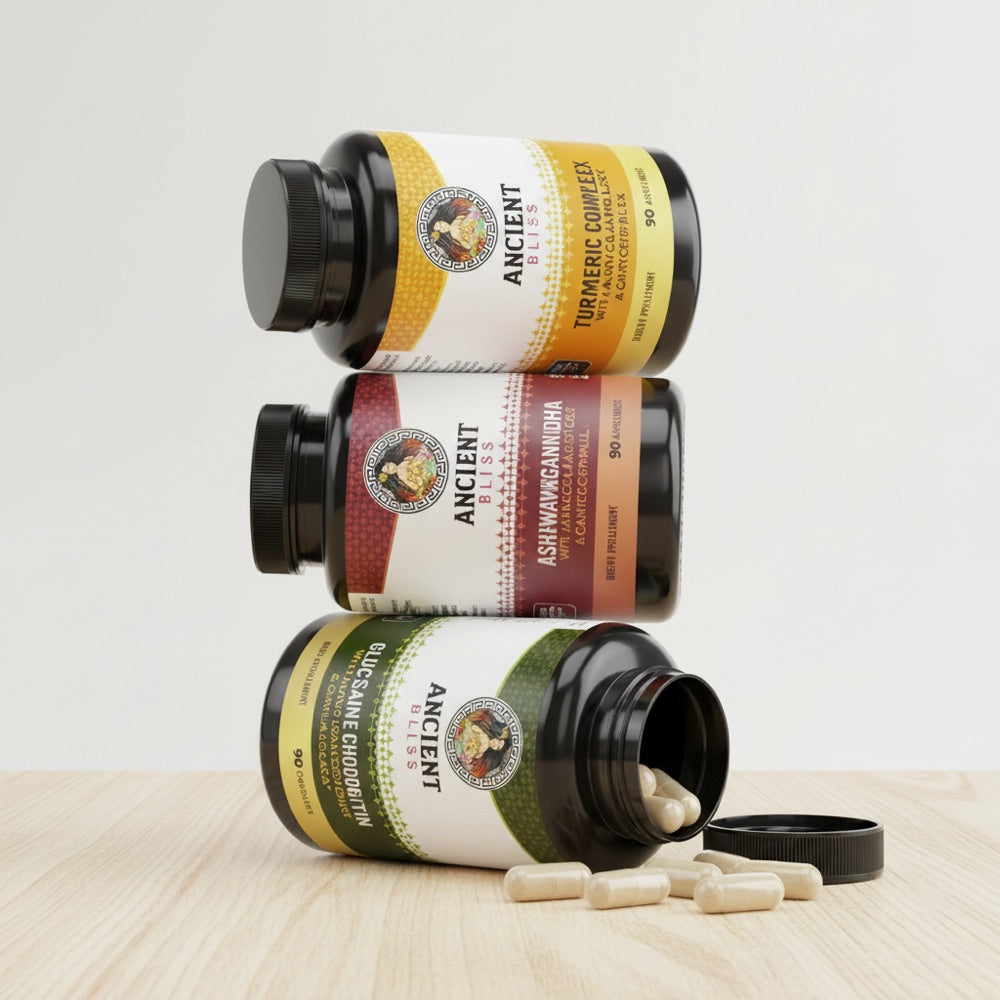
If glycinate sounds like your match, Ancient Bliss Magnesium Glycinate provides 200 mg of magnesium per serving in the gentle glycinate form, which leaves room within the daily supplemental limit. The directions are simple: one capsule daily with a full glass of water. I suggest taking it consistently for 30 days before you decide how it's working for you, and many people like it in the evening as part of a wind-down ritual. Ancient Bliss products are third-party tested.
Pair it with the rest of a calm evening: dim lights, a warm cup of caffeine-free tea and your phone in another room. My underrated ways to melt stress fit beautifully alongside a nightly magnesium habit.
A note from Macy: Please talk with your healthcare provider before starting any magnesium supplement, especially if you're pregnant or nursing, have kidney concerns or take medication. If sleep trouble or changes in your bowel habits last more than a few weeks, that's worth checking in about too.
Frequently asked questions
Is magnesium glycinate or citrate better?
Neither is better for everyone. Both are well absorbed. Glycinate is generally gentler on digestion and is the form tested in a recent sleep trial, so it suits daily relaxation routines. Citrate is more likely to have a laxative effect, so it suits people who want regularity support.
Does magnesium glycinate cause diarrhea?
Many people find it gentler than citrate, and in one small study it was better tolerated than magnesium oxide (4). Any magnesium can loosen stools if you take too much, so stay at the label amount and within 350 mg a day of supplemental magnesium unless your provider advises otherwise.
Which magnesium is most popular for sleep?
Glycinate is a popular choice for evening wind-down. It's the form tested in a recent randomized sleep trial, where it modestly improved insomnia scores over four weeks; stress and mood scores didn't differ from placebo (8).
When is the best time to take magnesium glycinate vs citrate?
Many people take glycinate in the evening, 30 to 60 minutes before bed, the timing used in the sleep trial (8). Citrate is often taken when you have easy access to a bathroom, since it can work within hours. With either one, consistency matters more than the exact time.
Can I switch from magnesium citrate to glycinate?
Yes. Compare the elemental magnesium per serving on both labels so you keep your intake steady. Many people find glycinate easier on digestion.
References
- NIH Office of Dietary Supplements. Magnesium: Fact Sheet for Health Professionals. ods.od.nih.gov
- Lindberg JS, Zobitz MM, Poindexter JR, Pak CY. Magnesium bioavailability from magnesium citrate and magnesium oxide. J Am Coll Nutr. 1990;9(1):48-55. doi:10.1080/07315724.1990.10720349
- Walker AF, Marakis G, Christie S, Byng M. Mg citrate found more bioavailable than other Mg preparations in a randomised, double-blind study. Magnes Res. 2003;16(3):183-191. PubMed 14596323
- Schuette SA, Lashner BA, Janghorbani M. Bioavailability of magnesium diglycinate vs magnesium oxide in patients with ileal resection. JPEN J Parenter Enteral Nutr. 1994;18(5):430-435. doi:10.1177/0148607194018005430
- Drugs.com. Saline Laxatives (Monograph), AHFS Drug Information. drugs.com
- Rao SSC, Brenner DM. Efficacy and safety of over-the-counter therapies for chronic constipation: an updated systematic review. Am J Gastroenterol. 2021;116(6):1156-1181. doi:10.14309/ajg.0000000000001222
- Morishita D, Tomita T, Mori S, et al. Senna versus magnesium oxide for the treatment of chronic constipation: a randomized, placebo-controlled trial. Am J Gastroenterol. 2021;116(1):152-161. doi:10.14309/ajg.0000000000000942
- Schuster J, Cycelskij I, Lopresti A, Hahn A. Magnesium bisglycinate supplementation in healthy adults reporting poor sleep: a randomized, placebo-controlled trial. Nat Sci Sleep. 2025;17:2027-2040. doi:10.2147/NSS.S524348