When women ask me which mineral I'd put on almost everyone's shelf, magnesium is usually my answer, and glycinate is the form I reach for first. It's gentle, it fits easily into an evening routine, and it touches so many of the things women tell me they care about: steadier moods through the month, calmer sleep, strong bones and muscles that actually relax. Here's what the research says about magnesium glycinate benefits for women, where it's still thin, and how to use it well.
Quick answer: Magnesium glycinate is magnesium bound to the amino acid glycine, a form many women find easy on the stomach. For women, research on magnesium points to support for premenstrual comfort and mood, relaxation and sleep, and bone and muscle health, though many of the studies are small. Most women need 310 to 320 mg of magnesium a day from all sources, and supplements should stay at or below 350 mg a day unless a provider advises more.
What is magnesium glycinate, and why do women choose it?
Magnesium is an essential mineral your body uses in hundreds of enzyme reactions, from making energy to relaxing muscles and sending nerve signals. An adult body holds about 25 grams of it, and 50% to 60% of that sits in your bones, according to the NIH Office of Dietary Supplements.
Magnesium glycinate (also called magnesium bisglycinate) is magnesium attached to glycine, a small amino acid. Because it is "chelated," or bound to an amino acid, it's often chosen by people who find other forms hard on digestion. The NIH notes that the aspartate, citrate, lactate and chloride forms tend to be absorbed better than magnesium oxide and sulfate. Glycinate's appeal is that it's gentle, which matters when you plan to take something every day.
Here's the part I think gets overlooked: many of us simply don't eat enough of it. National survey data cited by the NIH found that 48% of Americans get less magnesium from food and drinks than the estimated average requirement for their age and sex. Busy weeks, lots of processed food and fewer greens, nuts and seeds can all leave a gap.
What are the main magnesium glycinate benefits for women?
Here's a quick look at what the research covers and how strong it is. I'll go through each area below.
| Area | What research suggests | Strength of evidence |
|---|---|---|
| Premenstrual comfort and mood | Magnesium eased mood-related symptoms and bloating-type symptoms in small trials | Early: small trials, older studies |
| Sleep and relaxation | Magnesium bisglycinate modestly improved insomnia scores in adults with poor sleep | Early: one well-designed trial, small effect |
| Bones | Half or more of your body's magnesium is stored in bone; it works with calcium and vitamin D | Well established role; supplement data still growing |
| Muscles and everyday calm | Magnesium helps muscles relax after they contract and supports nerve signaling | Well established role in the body |
| Life stages (pregnancy, menopause) | Needs rise in pregnancy; a review links magnesium to menopausal comfort | Early for menopause; talk to your provider in pregnancy |
Can magnesium help with premenstrual symptoms?
This is one of the most common questions I get, and the research is encouraging, if small.
Can magnesium ease mood changes before your period?
In a double-blind, randomized trial, 32 women ages 24 to 39 with premenstrual symptoms took either a magnesium compound or a placebo three times a day from day 15 of their cycle until their period started. After two cycles, magnesium significantly improved total scores on the Menstrual Distress Questionnaire and the "negative affect" cluster, which covers mood changes like irritability and feeling low.
Does magnesium help with premenstrual bloating?
In a randomized, double-blind crossover trial analyzing 38 women, 200 mg of magnesium a day (as magnesium oxide) showed no benefit over placebo in the first month. In the second month, though, it led to a greater reduction than placebo in fluid-retention symptoms: weight gain, swelling of the hands and feet, breast tenderness and abdominal bloating. That second-month pattern is something I see in practice too. Magnesium tends to work as a steady habit, not a quick fix.
What does the wider research say?
A literature review of magnesium in gynecological practice concluded that magnesium supplementation may help with premenstrual discomfort, menstrual cramps and menstrual-related headaches, and may support comfort during menopause. The authors also pointed out that the research on how it works is sparse. So I'd call this promising, not proven. Neither PMS trial used the glycinate form, so results may not carry over exactly to glycinate.
If your cycle symptoms are severe enough to disrupt your life, please don't just reach for a supplement. That's worth a visit with your healthcare provider.
Does magnesium glycinate help women sleep?
Sleep troubles come up constantly in my conversations with women, especially around the cycle and in perimenopause. The most direct study on this form tested magnesium bisglycinate in 155 healthy adults ages 18 to 65 who reported poor sleep. Participants took 250 mg of elemental magnesium a day or a placebo.
- By week 4, Insomnia Severity Index scores dropped 3.9 points with magnesium versus 2.3 points with placebo, a small but statistically significant difference.
- Other measures did not differ significantly between the groups.
- In an exploratory analysis, people who ate less magnesium seemed to benefit more.
That last finding is why I always ask about diet first. I go much deeper into timing and the research in Magnesium Glycinate for Sleep: Benefits, Research and How to Take It.
How does magnesium support women's bones?
Since 50% to 60% of your body's magnesium is stored in bone, it's part of the structure itself, alongside calcium, and it works with vitamin D. Bone health becomes a bigger focus for many women in their 40s and beyond, and getting enough magnesium every day is one of the simplest building blocks. Food comes first here: pumpkin seeds, almonds, spinach, black beans and whole grains are all good sources. A supplement can help fill the gap when your diet falls short.
What does research say about magnesium and PMOS (formerly PCOS)?
PMOS, the new name for PCOS, affects many of the women in our community, so I want to be clear and careful here. In a randomized clinical trial of 64 women with PCOS, 250 mg of magnesium oxide a day for 10 weeks improved overall quality-of-life scores, including energy and emotional well-being, compared with placebo. It did not change acne, hair loss or irregular bleeding.
So magnesium may be a supportive piece of your daily routine, but it isn't a stand-alone answer for PMOS. This trial also used magnesium oxide, not glycinate. If you want the full picture, read PMOS (Formerly PCOS): What the New Name Means, Explained and my evidence-graded guide to supplements studied in PMOS, where inositol and berberine have far more research behind them.
How much magnesium do women need?
The Recommended Dietary Allowance (RDA) covers magnesium from all sources, food included:
| Women's age | Daily RDA | During pregnancy |
|---|---|---|
| 19–30 years | 310 mg | 350 mg |
| 31–50 years | 320 mg | 360 mg |
| 51+ years | 320 mg | — |
The upper limit for supplemental magnesium is 350 mg a day for adults. That limit covers supplements and medications only, not the magnesium in your food. When you compare labels, look at the elemental magnesium per serving, not the weight of the whole magnesium-plus-glycine compound.
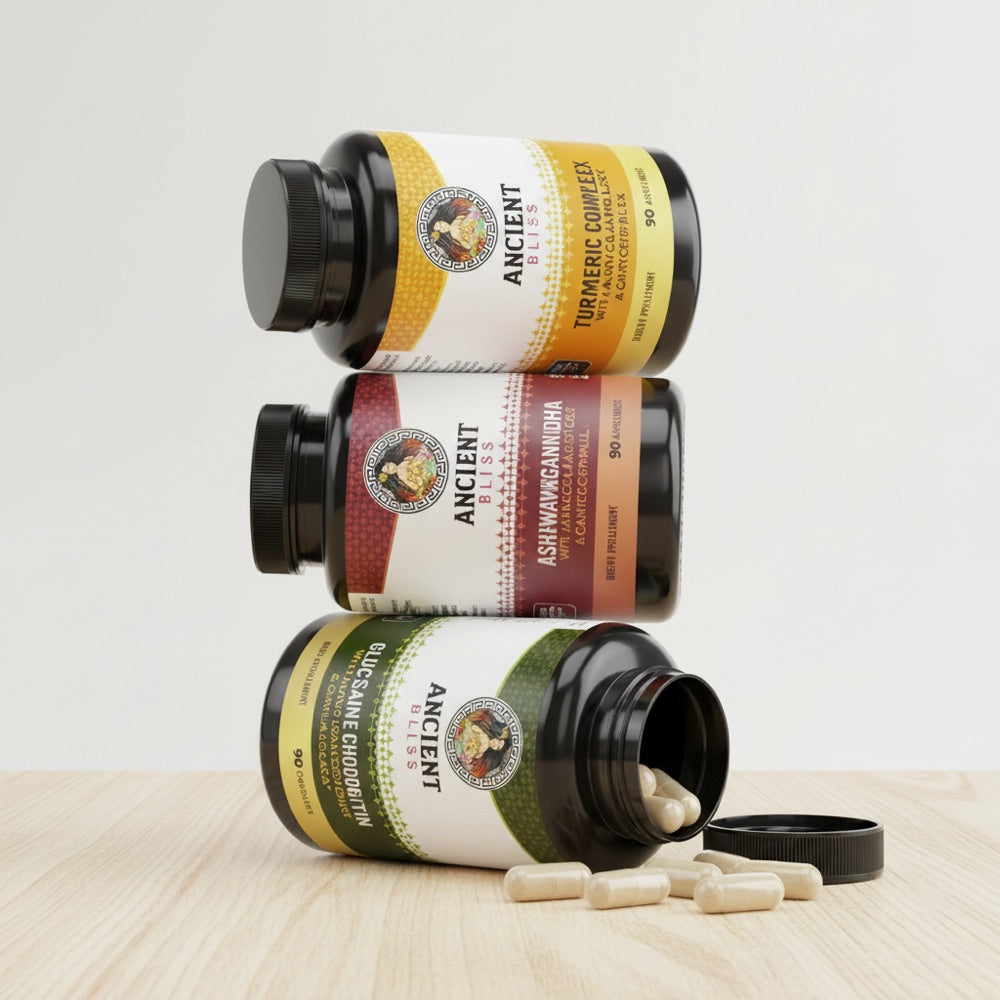
Ancient Bliss Magnesium Glycinate provides 200 mg of magnesium per serving in the gentle glycinate form, which leaves room in that daily limit. The directions are simple: one capsule daily with a full glass of water, taken consistently for 30 days, and many women continue beyond that. Ancient Bliss products are third-party tested.
When is the best time for women to take magnesium glycinate?
There's no single right time, and consistency matters more than the clock. That said, here's what I suggest:
- For sleep and calm: Take it in the evening, 30 to 60 minutes before bed, the window used in the sleep trial I mentioned.
- For cycle support: Take it every day, all month. In the bloating trial, the benefit showed up in the second cycle, so give it at least two months.
- With food or without: Glycinate is usually gentle either way. If your stomach is sensitive, take it with a meal.
Who should be careful with magnesium?
Magnesium glycinate is generally well tolerated at recommended amounts. Too much supplemental magnesium can cause diarrhea, nausea and stomach cramping. Please check with your provider first if:
- You're pregnant, nursing or trying to conceive. Your needs change, and your prenatal vitamin may already contain magnesium.
- You have kidney concerns. Your kidneys clear extra magnesium, so reduced kidney function raises the risk of getting too much.
- You take bone medications called bisphosphonates. Separate them from magnesium by at least 2 hours.
- You take certain antibiotics. Take tetracycline or quinolone antibiotics at least 2 hours before or 4 to 6 hours after magnesium.
- You take diuretics or long-term acid reducers. These can change how much magnesium your body keeps.
Frequently asked questions
Is magnesium glycinate good for women?
For most healthy women, yes. It's a gentle, well-tolerated form, and magnesium supports muscle relaxation, nerve function, bones and sleep. Research also suggests it may ease premenstrual mood changes and bloating, though those studies are small.
How long does magnesium glycinate take to work?
Some women notice a difference sooner, but studies measure results over weeks. The sleep trial looked at results at 4 weeks, and the bloating trial saw benefits in the second cycle, so give it one to two months of daily use.
Can I take magnesium glycinate every day?
Yes, for most healthy adults at the amount on the label. Keep supplemental magnesium at or below 350 mg a day unless your healthcare provider advises otherwise.
Magnesium glycinate or citrate for women?
Glycinate is gentler on digestion, so it's a common choice for daily use, sleep and calm. Citrate is also well absorbed but has a stronger laxative effect, so it's often used for occasional constipation.
Can I take magnesium glycinate with inositol or berberine?
There's no known reason they can't be taken in the same routine, and many women do. Because berberine and inositol are often used alongside medications, check with your provider, especially if you take anything for blood sugar.
A note from Macy: Magnesium is one of the gentlest ways to support your body through every phase of the month and every season of life, but it works best alongside good food, movement and rest. Please talk with your healthcare provider before starting any supplement, especially if you are pregnant, nursing, have kidney concerns or take medication.
References
- NIH Office of Dietary Supplements. Magnesium: Fact Sheet for Health Professionals. ods.od.nih.gov/factsheets/Magnesium-HealthProfessional
- Facchinetti F, Borella P, Sances G, Fioroni L, Nappi RE, Genazzani AR. Oral magnesium successfully relieves premenstrual mood changes. Obstetrics and Gynecology. 1991;78(2):177–181. PubMed 2067759
- Walker AF, De Souza MC, Vickers MF, Abeyasekera S, Collins ML, Trinca LA. Magnesium supplementation alleviates premenstrual symptoms of fluid retention. Journal of Women's Health. 1998;7(9):1157–1165. doi:10.1089/jwh.1998.7.1157
- Parazzini F, Di Martino M, Pellegrino P. Magnesium in the gynecological practice: a literature review. Magnesium Research. 2017;30(1):1–7. doi:10.1684/mrh.2017.0419
- Schuster J, Cycelskij I, Lopresti A, Hahn A. Magnesium Bisglycinate Supplementation in Healthy Adults Reporting Poor Sleep: A Randomized, Placebo-Controlled Trial. Nature and Science of Sleep. 2025;17:2027–2040. doi:10.2147/NSS.S524348
- Jaripur M, Ghasemi-Tehrani H, Askari G, et al. The effects of magnesium supplementation on abnormal uterine bleeding, alopecia, quality of life, and acne in women with polycystic ovary syndrome: a randomized clinical trial. Reproductive Biology and Endocrinology. 2022;20:110. doi:10.1186/s12958-022-00982-7